Published: March 8, 2026
AI video isn't the future of marketing — it's the present. But most teams are still treating it like a novelty rather than a competitive weapon. Here are five proven strategies for integrating AI-generated video into your marketing stack right now.
1. Scale Your Ad Creative Testing
The biggest advantage AI video gives marketing teams isn't cost savings — it's testing velocity.
Traditional video production forces you to commit to a single creative direction. By the time you've filmed, edited, and approved it, you've spent weeks on a hypothesis you can't validate until it's live.
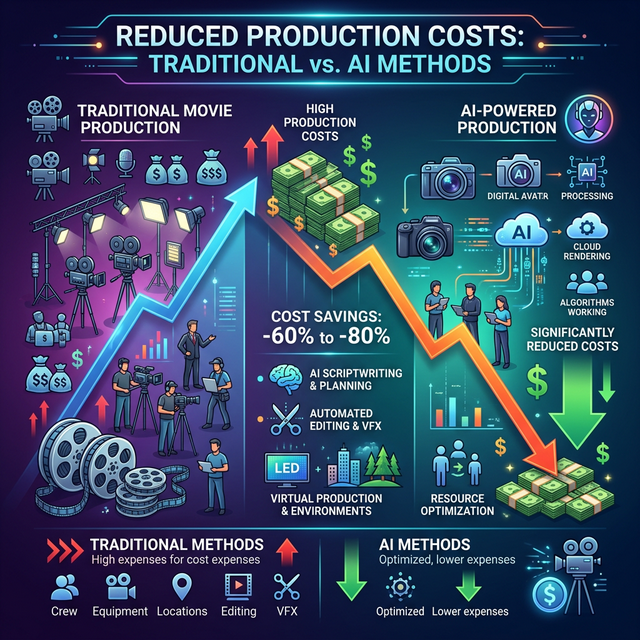
With ltx 2.3, you can generate 20+ video variants in the time it takes to write one creative brief:
- Different hooks: Test 5 different opening frames to find the best scroll-stopper
- Different environments: Place your product in urban, outdoor, luxury, and casual settings
- Different pacing: Fast cuts for TikTok, slower cinematic builds for YouTube
- Different color grading: Warm tones for lifestyle feel, cool tones for tech sophistication
- Different CTAs: Experiment with urgency-driven vs. benefit-driven end sequences
Pro tip: Don't just test the visuals. Use ltx 2.3's text-to-video to test entirely different messaging angles — emotional vs. rational, problem-focused vs. solution-focused.
The Testing Workflow
Here's a practical workflow for scaling ad creative testing with ltx 2.3:
- Define your hypothesis: What message or visual approach do you want to test?
- Write 5-10 prompt variations: Each prompt should represent a distinct creative direction
- Generate with ltx 2.3: Produce 2-3 versions of each prompt to pick the best execution
- Launch simultaneously: Deploy all variants on the same audience segment with equal budgets
- Measure after 48 hours: Kill underperformers, scale winners, and iterate on the top 3
Teams using this workflow report 40-60% improvements in click-through rates compared to single-creative campaigns. The math is simple: when testing is cheap, you can afford to discover what actually resonates with your audience rather than guessing.
2. Automate Product Demo Videos
Every product page should have video. Studies consistently show that product pages with video see 80%+ higher conversion rates. But filming individual product demos for thousands of SKUs? Impossible with traditional production.
Here's the AI video approach:
- Upload a product photo to ltx 2.3
- Describe the demo scenario: "Product rotating on a marble countertop with warm studio lighting"
- Generate multiple angles and environments
- A/B test which video drives the highest add-to-cart rate
The physics-aware engine ensures that your product doesn't float, warp, or produce uncanny motion. Reflections, shadows, and material properties look physically accurate.
Scale Across Your Entire Catalog
The real power of AI-powered product demos reveals itself at scale. Consider an e-commerce brand with 500 SKUs. Traditional video production would cost $50,000-$250,000 to cover the full catalog. With ltx 2.3, the same brand can generate videos for every single product in days, not months.
The workflow becomes:
- Batch upload: Feed product images directly into the generation pipeline
- Template prompts: Create reusable prompt templates for different product categories (e.g., "skincare product gently rotating on a dewy leaf with soft morning light")
- Automated quality check: Use internal scoring to filter the top-quality outputs
- Deploy to product pages: Push generated videos directly to your CMS
Brands implementing this strategy are seeing 2-3x increases in average time on product pages and measurable lifts in add-to-cart rates. More importantly, they're maintaining video coverage across their entire catalog — something that was economically impossible before ltx 2.3.
3. Create Platform-Native Social Content
The era of "one video fits all platforms" is over. Each social platform has its own visual language:
| Platform | Format | Style | Length |
|---|---|---|---|
| TikTok | 9:16 vertical | Fast-paced, authentic | 15-60s |
| Instagram Reels | 9:16 vertical | Polished, aspirational | 15-30s |
| YouTube Shorts | 9:16 vertical | Hook-first, educational | 30-60s |
| 16:9 landscape | Professional, data-driven | 30-90s | |
| 1:1 or 16:9 | Emotional, shareable | 15-30s |
ltx 2.3 natively supports vertical 9:16 format — not cropped from landscape but actually trained on portrait-orientation data. This means your vertical video looks intentionally composed, not like an afterthought.
Building a Multi-Platform Content Machine
The smartest marketing teams aren't creating one video and reformatting it. They're using ltx 2.3 to generate platform-specific content from the ground up. Here's what that looks like in practice:
For TikTok: Generate fast-paced, attention-grabbing content with bold visual transitions. Use prompts that emphasize dynamic camera movement, quick cuts, and eye-catching environments. ltx 2.3's physics engine ensures that even rapid action sequences maintain visual coherence.
For Instagram Reels: Focus on aesthetic quality. Generate content with careful composition, beautiful lighting, and aspirational settings. The fine detail preservation in ltx 2.3 means that luxury aesthetics — bokeh backgrounds, golden hour glow, smooth textures — render convincingly.
For LinkedIn: Generate professional, polished content that communicates expertise. Data visualization overlays, clean corporate environments, and measured pacing work best here. ltx 2.3's text rendering capability means on-screen statistics and quotes remain legible.
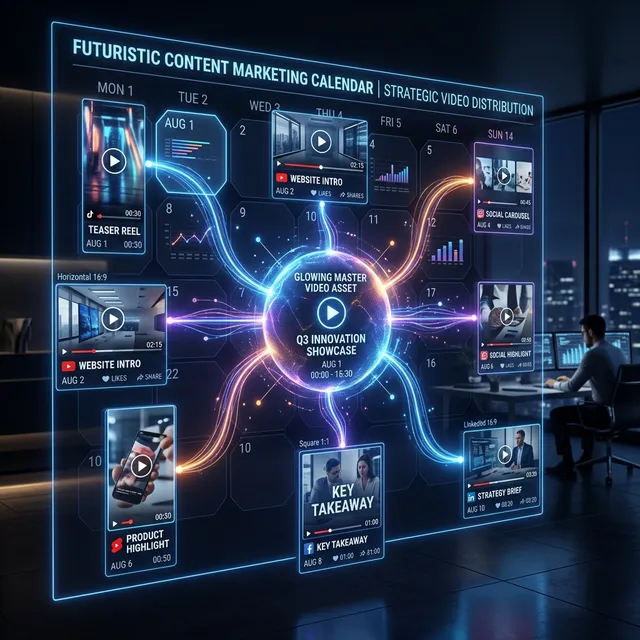
Teams using this multi-platform approach with ltx 2.3 report 3-5x higher engagement rates compared to single-format content distributed across platforms.
4. Personalize Video at Scale
The future of marketing is personalization, and AI video makes personalized video content economically viable for the first time.
By Audience Segment
Generate different video creatives for different audience segments. A fitness brand might create:
- For gym enthusiasts: High-energy workout footage with intense lighting and powerful music cues
- For yoga practitioners: Calm, ethereal scenes with soft natural light and gentle ambient sounds
- For runners: Dynamic outdoor footage with sweeping camera movements and open landscapes
Each segment receives content that speaks directly to their lifestyle and aspirations. With ltx 2.3, the cost of creating these variants is marginal — a few minutes of generation time rather than separate production shoots.
By Market
Need localized content? Instead of re-shooting, just change the text prompt:
- Same product, different cultural contexts and visual settings
- Region-specific scenarios and environments (urban Tokyo, rural France, coastal Australia)
- Language-appropriate text overlays and on-screen messaging
By Funnel Stage
Different stages of the customer journey demand different visual approaches:
- Awareness: Broad, emotionally engaging content that introduces the brand story
- Consideration: More detailed product demonstrations and comparison content
- Decision: Social proof, testimonials, and urgency-driven visuals
- Retention: Thank you sequences, usage tutorials, and loyalty rewards highlights
ltx 2.3 enables marketing teams to create unique video content for each funnel stage, for each audience segment, for each platform — a level of personalization that traditional production simply cannot achieve at any budget.
5. Build a Content Flywheel
The most powerful marketing strategy isn't individual campaigns — it's building a content flywheel where each piece of content feeds the next.
Here's how AI video fits:
- Blog post about a topic (like this one) → drives organic search traffic
- Social video clips extracted from blog content → drives social engagement
- Ad creatives derived from top-performing social → drives paid acquisition
- Product videos on landing pages → converts traffic into customers
- Customer success stories → feed back into blog and social content
With ltx 2.3, you can produce the video assets for every stage of this flywheel — not just one or two touchpoints.
Making the Flywheel Spin Faster
The key to a successful content flywheel is reducing the friction at each stage. Here's how ltx 2.3 accelerates each transition:
- Blog → Social: Generate 5-10 short video clips that illustrate key points from each blog post. Use these as native social content that drives traffic back to the full article.
- Social → Ads: Take your best-performing organic social videos and promote them as paid ads. The creative has already been validated by organic engagement data.
- Ads → Conversions: Use the style and themes from your winning ads to generate product-specific videos on your landing pages and product pages.
- Conversions → Retention: Create onboarding videos, how-to guides, and feature announcement clips that keep customers engaged post-purchase.
The flywheel compounds over time. As you generate more content, you accumulate more performance data. As you accumulate more data, your prompt strategies become more refined. As your prompts improve, your generated content performs better — creating a positive feedback loop that continuously improves your marketing ROI.
For content creators looking to build this kind of system, ltx 2.3 offers the director-level controls needed to maintain visual consistency across all touchpoints.
Measuring AI Video Marketing ROI
Before scaling AI video production, establish clear measurement frameworks:
- Creative velocity: How many video variants can your team produce per week?
- Testing throughput: How many A/B tests are running simultaneously?
- Cost per creative: What's the total cost (tools + time) of each video variant?
- Performance lift: What improvement in CTR, CVR, and ROAS are you seeing versus static image campaigns?
Marketing teams that track these metrics consistently find that AI-generated video delivers 3-10x better return on creative investment compared to traditional video production — not because AI video is inherently better, but because the testing velocity enables faster learning and optimization.
Getting Started
Don't wait for perfect. Start by generating video for your highest-traffic product page and measure the conversion lift. Try ltx 2.3 for free and see the results for yourself.
Want to understand the technology behind it? Read our ltx 2.3 features overview or our technical architecture deep dive.