Build With the Most Advanced Open-Source AI Video Model
Apache 2.0 licensed Diffusion Transformer. Run locally, customize with LoRA, deploy on your own infrastructure. Full weights, zero restrictions.


Open-Source Model
Full model weights under Apache 2.0. Run locally, modify, retrain, or deploy on your own GPUs. No vendor lock-in.

LoRA Fine-Tuning
Stack up to 3 LoRA adapters simultaneously — style, motion, and character control in a single generation pass.
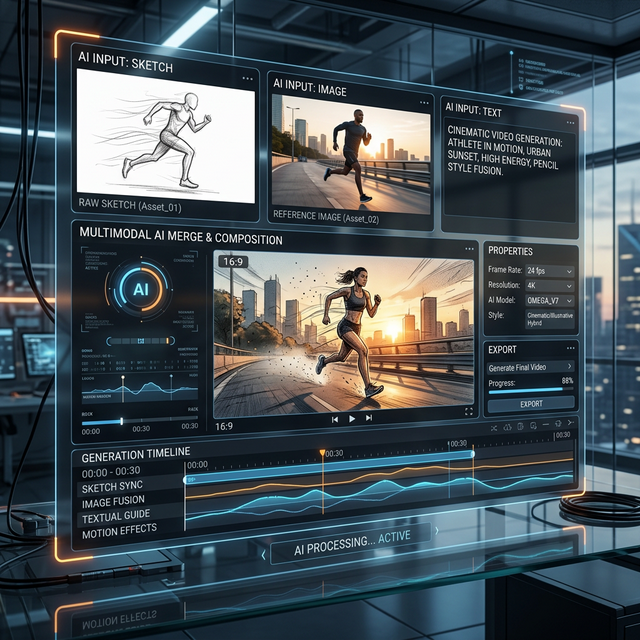
ComfyUI Integration
Node-based workflow control over every aspect of the generation pipeline. Chain conditioning, LoRA, and upscaling nodes.
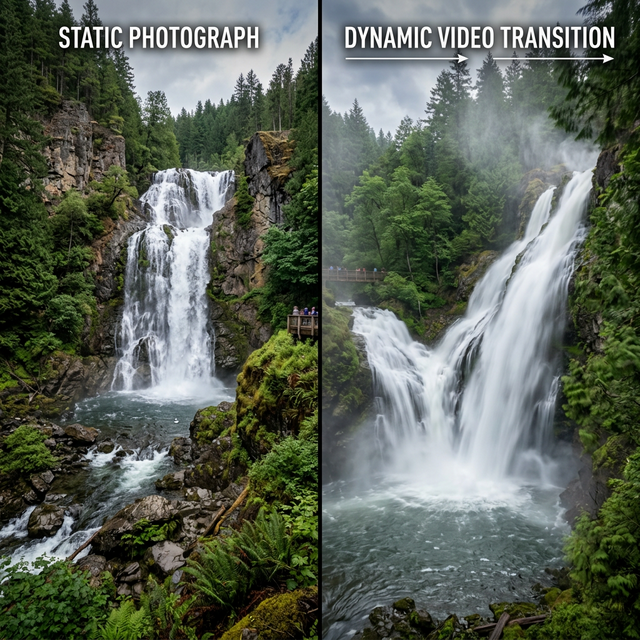
LTX Desktop App
Free local generation app. No cloud dependency, no usage limits, full privacy. Just download and start generating.
Technical Specifications
Why Developers Choose ltx 2.3
Self-Hosted Inference
Run on your own A100, H100, or even RTX 4090 for production-quality 1080p output.
Python SDK
pip install and start generating in 5 lines of code. Clean, documented API.
Unified Architecture
Single model for text-to-video, image-to-video, and audio-to-video. No separate pipelines.
Upscaling Pipeline
Spatial and temporal upscalers for multi-stage workflows. Generate fast, upscale for delivery.
Batch Processing
Automate video generation at scale for e-commerce, gaming, or media pipelines.
Community Ecosystem
Active open-source community with shared LoRAs, workflows, and extensions.
The Future of Open-Source AI Video Generation for Developers
For years, developers working in the generative AI space have been forced to rely on closed-source APIs and proprietary architectures. These black-box models often came with prohibitive costs, rate limits, and zero transparency into their training data or underlying mechanics. When building applications that required robust, cinematic AI video generation, developers were at the mercy of platform changes, sudden pricing hikes, and restricted usage capabilities.
With the release of ltx 2.3, the paradigm has shifted. Released under an open-source permissive Apache 2.0 license, ltx 2.3 open source provides developers with unbridled access to a state-of-the-art AI video model. This guide delves into the technical architecture, deployment strategies, and integration possibilities that make this the premier choice for developers and machine learning researchers today.
Technical Architecture Breakdown
At its core, ltx 2.3 is an advanced AI video model for developers, built upon a highly optimized Diffusion Transformer (DiT) architecture. Unlike older U-Net-based diffusion models that struggled with spatial consistency over extended generational times, the DiT backbone allows ltx 2.3 to effectively scale its understanding of both short-term motion vectors and long-term narrative coherence.
The Unified Multimodal Engine
What truly separates ltx 2.3 from previous iterative video generative models is its unified multimodal processing engine. In legacy architectures, text prompts, image conditioning, and audio generation were often handled by distinctly separate models piped together through fragile wrapper scripts. This led to significant latency, synchronization drift between audio and video, and higher operational costs. ltx 2.3 processes input text, reference images, and desired audio outputs through a singular, cohesive attention mechanism. By evaluating these modalities within the same computational space, the model achieves perfect lip-sync, diegetic sound effects that precisely match visual impacts, and a semantic consistency that is mathematically impossible to achieve in multi-model pipelines. For an open source AI video generator, this unified approach dramatically reduces overhead and makes the integration process cleaner.
4K Resolution and Spatial Consistency
When dealing with high-resolution generation, VRAM management becomes exponential. ltx 2.3 introduces a highly efficient, compressed latent space via a newly designed Variational Autoencoder (VAE). This VAE retains incredibly fine details, ensuring that elements like character faces, text on signs, and intricate textures (like hair or fabric weaves) do not degrade or 'melt' as the video progresses. The output scales natively up to 4K resolution at 48 frames per second (FPS), all while maintaining the strict physics-aware constraints necessary for realistic movement.
Integrating LTX 2.3 into Your Tech Stack
Because ltx 2.3 is open source, developers have full autonomy over how and where they deploy the model. Whether you are building a consumer-facing mobile app, an enterprise-level content generation suite, or conducting academic research, ltx 2.3 offers the flexibility required.
Self-Hosted Inference
Owning your infrastructure is critical for many startups and enterprise teams handling sensitive user data. The ltx 2.3 open source weights are available directly via Hugging Face. You can load these weights into your preferred PyTorch environment and wrap them in a FastAPI or gRPC server. A standard deployment on an NVIDIA A100 (80GB) instance can comfortably handle batch processing for 1080p generation, yielding roughly 50 frames per second during inference. For teams prioritizing throughput over resolution, utilizing INT8 quantization can slash VRAM requirements in half with minimal perceivable quality degradation, allowing you to run the model on more affordable RTX 3090 or RTX 4090 hardware.
Python SDK and API Usage
For developers who want to abstract the lower-level PyTorch tensor management, the official Python SDK provides an elegant interface for integrating ltx 2.3 into existing backends. You can programmatically define camera paths, supply negative prompts, configure sampling steps, and manage the unified audio generation track with just a few lines of code.
from ltx_video import LTXPipeline

# Initialize the pipeline
pipe = LTXPipeline.from_pretrained('Lightricks/LTX-Video-2.3', device='cuda')

# Generate cinematic output
prompt = 'Drone shot over an alien neon city at sunset, flying cars, volumetric fog.'
video_path = pipe.generate(
    prompt=prompt,
    resolution='1080p',
    fps=24,
    num_frames=120,
    audio=True
)
print(f'Generated video saved to: {video_path}')
The ComfyUI Video Pipeline
One of the strongest communities in the open-source generative AI space centers around ComfyUI. Recognizing this, ltx 2.3 features first-class ComfyUI video integration. By leveraging existing node-based architectures, developers can visually construct massive, complex generation pipelines. Within ComfyUI, you can route the output of an ltx 2.3 base generation directly into an upscaling node, pass it through an external face-restoration model, or layer it with a specific stylistic post-processing algorithm. This modular approach is unparalleled for rapid prototyping and debugging complex generation flows.
Advanced Customization: ltx 2.3 LoRA Fine-Tuning
The base model of ltx 2.3 is incredibly capable, but true enterprise value is unlocked through customization. This is where Low-Rank Adaptation (LoRA) comes into play. ltx 2.3 LoRA fine-tuning allows developers to train the model on highly specific datasets—such as a brand's unique product lines, a specific art style, or a consistent virtual character—without the massive computational expense of a full model fine-tune.
How LoRA Works with LTX 2.3
Instead of updating all billions of parameters in the DiT backbone, LoRA injects small, trainable matrices into specific attention blocks. The result is a lightweight adapter file (frequently under 200MB) that can be dynamically loaded alongside the frozen base model during inference. For developers, this means you can offer your users hyper-personalized generation. If you are building a SaaS product for marketing agencies, you can train a distinct LoRA for each client agency based on their brand guidelines. When that agency logs into your platform, your backend simply loads their specific LoRA weights alongside the ltx 2.3 base model.
Stackable Adapters
The architecture supports up to three simultaneous LoRA adapters. This composability is a game-changer. You can load a 'Cinematic Lighting' LoRA, a 'Specific Anime Character' LoRA, and a 'Fluid Camera Motion' LoRA simultaneously. By tweaking the weight of each adapter via the API, you can achieve granular control over the final output that zero-shot prompting could never reliably produce.
Expanding the AI Video Ecosystem
Open-source models live and die by their community, and the ltx 2.3 ecosystem is thriving. By choosing this AI video model for developers, you are opting into a massive network of shared knowledge, pre-trained LoRA adapters, and open-source tooling. Whether you check the GitHub repositories for the latest memory optimization scripts, visit Hugging Face to download community-trained style adapters, or browse Discord for ComfyUI workflow templates, you are not building in a vacuum.
Custom Applications and Edge Cases
- Interactive Gaming: Developers are exploring real-time, dynamic cutscenes generated on the fly based on player choices and player-customized characters.
- E-Commerce and Virtual Try-On: By training a LoRA on a specific catalog of clothing, e-commerce platforms can dynamically generate video of models walking down a runway wearing items that do not physically exist yet.
- Educational Avatars: Ed-tech platforms are using ltx 2.3 to generate consistent teaching avatars that deliver educational scripts with perfect lip-sync, eliminating the need to record human instructors for every syllabus update.
Embracing the Open Source Advantage
When evaluating an open source AI video generator versus a closed API, consider the long-term strategic implications. With a closed API, your entire business model relies on the uptime, pricing strategy, and continued existence of a third-party corporation.
With ltx 2.3 open source deployed on your own infrastructure, you own your product's destiny. You can guarantee data privacy to enterprise clients. You can lock in your inference costs. You can modify the core architecture to suit your specific edge cases.
Conclusion
The era of gatekept, prohibitively expensive AI video generation is ending. ltx 2.3 represents a massive leap forward for developer autonomy. With its state-of-the-art multimodal DiT architecture, extensive LoRA customization capabilities, and native ComfyUI video integration, the model is built for production environments.
By integrating ltx 2.3 into your tech stack today, you are future-proofing your applications and gaining a distinct competitive advantage in the rapidly accelerating world of generative AI. Clone the repository, read the documentation, spin up an instance, and start building the future of video today.
Explore Other Solutions
Start Building Today
Download the model weights, fire up your GPU, and generate your first video. Apache 2.0 — no restrictions, no royalties.